DC Ranch Community Guide to Villages, Trails & Club Life
April 23, 2026
April 23, 2026
If you are trying to understand DC Ranch, it helps to stop thinking of it as just another North Scottsdale neighborhood. DC Ranch is better described as a connected lifestyle community, where villages, parks, trails, community centers, and club amenities all work together. If you want a clearer picture of how the area is laid out and what daily life can look like here, this guide will walk you through the basics. Let’s dive in.
According to the DC Ranch community overview, DC Ranch is a 4,400-acre community in North Scottsdale next to the McDowell Sonoran Preserve. It includes more than 2,800 homes, about 7,000 residents, and dates back to 1997, when the first home was completed.
The easiest way to understand the layout is in two layers. At the top level, DC Ranch is divided into four residential villages: Country Club, Desert Camp, Desert Parks, and Silverleaf. Within each village, you will find individual neighborhoods with their own names, housing types, and setting.
For buyers, that structure matters because it shapes how each part of the community feels. You are not just choosing a home. You are also choosing a village setting, trail access pattern, nearby amenities, and in some cases, club proximity.
Country Club Village is one of the original DC Ranch villages, with first residents moving in during 1997. It sits near Pima Road and the Reata Wash and is known for a desert-sensitive architectural character with influences that include Western Regional, Ranch House, Spanish Eclectic, Pueblo, and Prairie styles.
Neighborhood names listed by the HOA include Country Club, Columbia Community, Monterey, Happy Hollow, Cross Canyon, Tapadero, Iron Rings, and Craggy Spur. In practical terms, many buyers look here when they want west-side location advantages and close proximity to golf club living within the broader DC Ranch setting.
Desert Camp Village is east of Pima Road and south of Thompson Peak Parkway. It offers a wider mix of housing types, including single-family homes, patio homes, condominiums, and townhomes.
This village also contains Market Street, which gives it a more convenience-driven feel for many residents. Neighborhoods here include Market Street Villas, Courtyards at Market Street, Village at Market Street, Desert Camp Villas, Pioneer, Montelena, and The Haciendas.
Desert Parks Village is east of Pima Road and south of Legacy Boulevard. The village includes custom and non-custom single-family homes, attached homes, and luxury apartments.
A defining feature here is its park-centered layout. The official village description notes that neighborhoods are centered around parks, natural wash areas, and private gated access, which gives this part of DC Ranch a more tucked-away, neighborhood-oriented feel.
Silverleaf is the estate-oriented village set against the McDowell Mountain hillsides. The official description highlights Spanish and Mediterranean Revival architecture, formal gardens, significant open desert, and some lots on the Silverleaf Golf Course.
The village also includes 11 parks and a pedestrian underpass for children walking or bicycling to Copper Ridge School. For buyers comparing the four villages, Silverleaf is often the one associated with a more elevated hillside setting and larger-scale luxury homes.
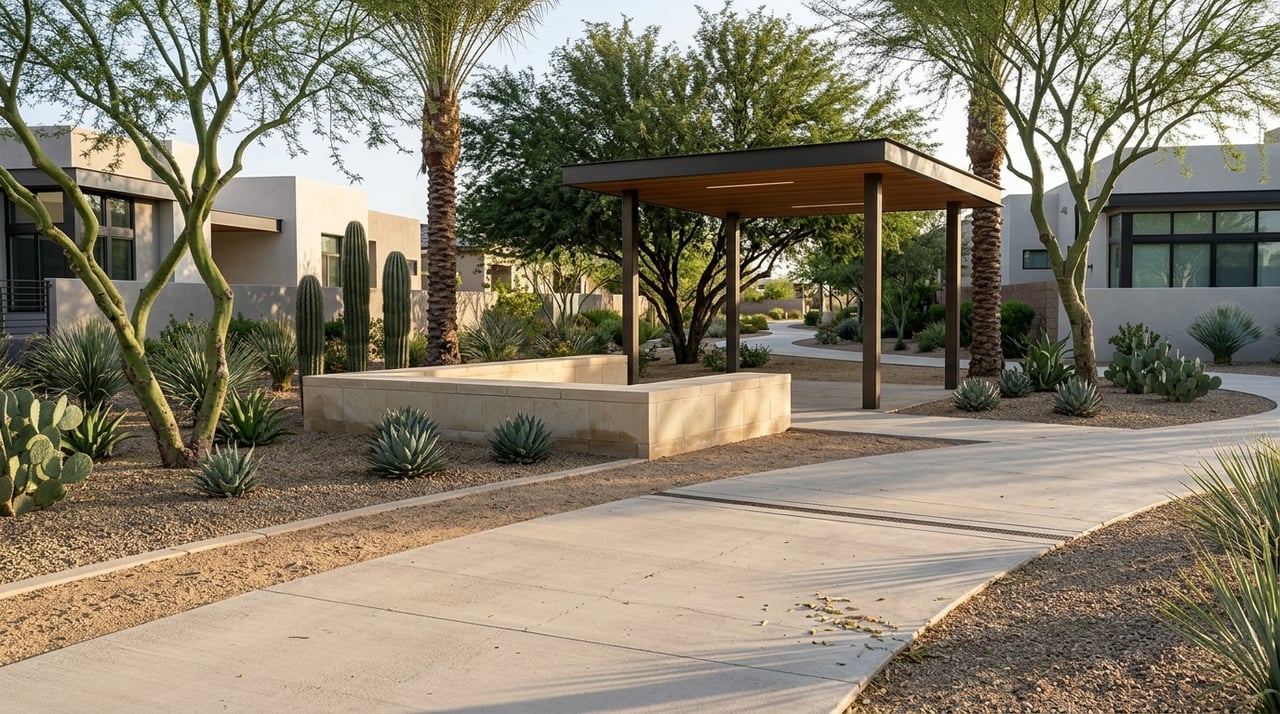
One of the most distinctive things about DC Ranch is how much the outdoor network shapes everyday life. The community says it has 47 parks and more than 50 miles of landscaped paths and trails, linking neighborhoods and both community centers while helping residents move around without crossing busy streets.
That connectivity is a big part of the appeal. Instead of isolated pockets, DC Ranch feels intentionally linked, with paths connecting homes to parks, gathering spots, and amenities across the community.
Motorized vehicles are not allowed on these paths and trails except for authorized crews. That helps preserve the pedestrian- and bike-friendly character that many buyers are looking for when they want an active outdoor lifestyle close to home.
DC Ranch’s trail system also connects to the McDowell Sonoran Preserve. Scottsdale describes the preserve as a large, permanently protected desert habitat with non-motorized multi-use trails that are open daily from sunrise to sunset and free of charge.
For many buyers, this is one of the strongest lifestyle advantages in the area. You are not just getting neighborhood walking paths. You are also getting a direct relationship to one of Scottsdale’s best-known outdoor resources.
The parks in DC Ranch are not one-size-fits-all. According to the community, some are formal, some are designed around play, and others are pocket parks tucked into neighborhoods.
Amenities can include fire pits, waterfalls, seat walls, shade canopies, ramadas, and even a life-sized chess board at Homestead Park in Silverleaf Village. Many parks also feature views toward the McDowell Mountains, which adds to the sense of open space across the community.
Two public examples help illustrate the range. DC Ranch Park, a City of Scottsdale park at N. 91st Street and E. Trailside View, is open from sunrise to 10:30 p.m. and includes reservable ramadas, picnic areas, volleyball courts, and fields. Market Street Park is a smaller public open space east of Market Street Plaza with a fire pit, grills, a play area, a natural stage, and shade cover.
The outdoor system did not happen by accident. The DC Ranch Community Facilities District explains that it was formed in 1997 to finance parks, paths, trails, roads, athletic fields, and related infrastructure later dedicated to the City of Scottsdale for operation. That background helps explain why the community feels especially built-out and interconnected.
DC Ranch also points to its Wildflower Program as a signature part of the landscape. The community says the program was planned with the City of Scottsdale more than 20 years ago and has grown into one of Arizona’s largest native wildflower displays.
For residents, that is a reminder that outdoor design is part of the identity here, not just an afterthought. The setting is meant to feel landscaped, walkable, and tied to the surrounding desert environment.
Club and wellness amenities are another major part of the DC Ranch appeal. The official golf and health club page identifies three major clubs in the community: The Country Club at DC Ranch, Silverleaf Club, and DC Ranch Village Health Club & Spa.
These are not all the same type of amenity, which is important if you are comparing lifestyle fit. Some buyers care most about golf and clubhouse dining, while others care more about wellness, fitness classes, pools, or everyday recreation options.
The Country Club at DC Ranch is the clearest match for buyers seeking traditional golf-club living. The club describes itself as family-friendly and includes a Tom Lehman and John Fought golf course, the Hacienda clubhouse, dining patios, a fitness room, tennis, and swimming.
If club access is a top priority in your search, this is one of the key lifestyle elements to evaluate as you compare homes within and around the community.
Silverleaf Club is positioned as a more exclusive club experience. It includes a Tom Weiskopf-designed 18-hole championship course, a Mediterranean-style clubhouse, spa facilities, resort and lap pools, and both fine and casual dining.
For buyers focused on a luxury club environment, Silverleaf often stands apart because of its setting and amenity package. As always, the practical question is how that club lifestyle lines up with the village and neighborhood you are considering.
Not every buyer wants golf to be the center of the lifestyle equation. DC Ranch Village Health Club & Spa offers a broader wellness option, with 170-plus group fitness and yoga classes each week, personal training, pools, and spa and MedSpa services.
That makes DC Ranch appealing to buyers who want a fitness-oriented routine without making golf the main deciding factor.
Beyond the private club environment, DC Ranch also has two important resident community centers. The Desert Camp Community Center is described as the heart of community activities and social gatherings.
It includes pools, a fitness center, a fitness studio, basketball, tennis, pickleball, event spaces, and outdoor gathering areas. For many residents, this is where the broader community aspect of DC Ranch becomes most visible.
The Homestead adds another layer of resident life with coffee-style gathering space, a veranda, a splash pad, a playground, basketball, fitness classes, youth activities, event facilities, and the Homestead Playhouse community theatre. These features help explain why DC Ranch often feels active and organized rather than simply residential.
According to the community center access page, access is tied to resident-paid monthly assessments and managed through a resident credential app or front-desk check-in. The same page also notes that both centers can be rented for private events and that resident clubs, volunteer groups, and annual events are part of community involvement.
If you are in the early stages of your search, a simple framework can help you narrow the fit.
That is not an official ranking by DC Ranch. It is simply a practical way to interpret the village descriptions and match them to different buyer priorities.
At its core, DC Ranch works because the parts fit together. The homes are organized into villages, the villages connect through parks and trails, and the outdoor network ties back into community centers, clubs, and the preserve.
That is why DC Ranch tends to feel more like a complete lifestyle community than a single subdivision. If you are relocating, moving up, or simply trying to understand where each enclave fits, that connected structure is often the key to making a smart decision.
If you want help comparing villages, weighing lifestyle priorities, or identifying the right fit in DC Ranch, the team at The RTT Home Group can help you navigate the details with clear, locally grounded guidance.
Stay up to date on the latest real estate trends.


THE RTT HOME GROUP
21020 N PIMA RD SCOTTSDALE AZ 85255