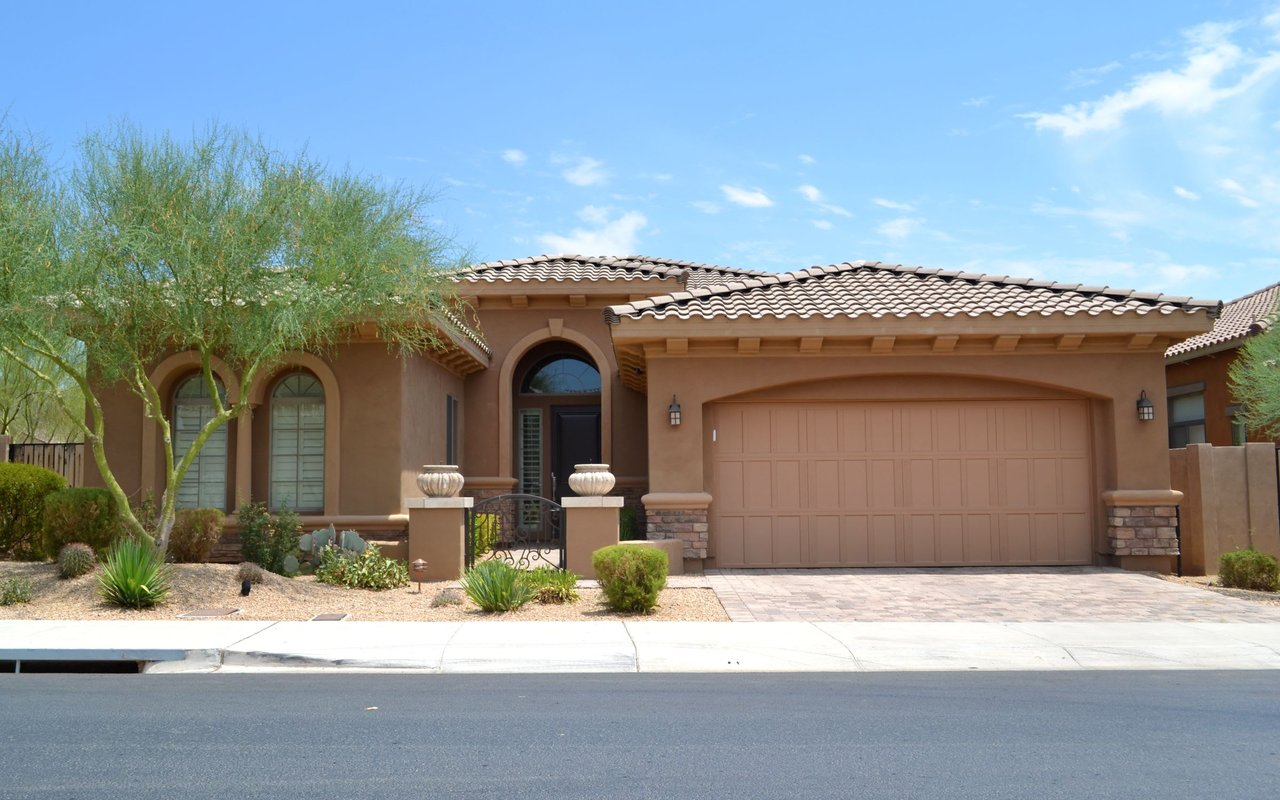
Trying to decide between a condo or a single-family home in Desert Ridge? You are not alone. Buyers here range from relocating professionals to retirees and investors, and each has different goals for space, maintenance, and rental potential. In this guide, you will see clear tradeoffs, real numbers, and simple checklists to help you choose what fits your life and budget. Let’s dive in.
Desert Ridge at a glance
Desert Ridge is a master-planned area in north Phoenix within Maricopa County, spanning parts of ZIP codes 85050 and 85054. A master association overlays neighborhood HOAs, so most owners interact with more than one community layer. You can see the general boundaries and location on a neutral map resource for context at the Desert Ridge neighborhood page on Zipdatamaps. Explore Desert Ridge’s location and boundaries.
Lifestyle and access drive demand here. The Desert Ridge Marketplace is a major retail and entertainment hub that draws daily activity and supports nearby housing. Read more about Desert Ridge Marketplace. The Mayo Clinic campus nearby also anchors employment and creates steady buyer and renter interest.
Prices and value today
As of early 2026, the aggregate median sale price across all home types in Desert Ridge trends around the high $600Ks. Month to month can swing, so always check fresh MLS data before you make an offer.
- Condos and townhomes show a wide range. You will find options from the high $300Ks and $400Ks into the $700Ks, with luxury lines exceeding $1 million in select buildings.
- Single-family homes skew higher. Many trade in the $700Ks to $1 million plus, with premiums tied to lot size, updates, and location within the master plan.
If you are value-focused, the spread means you can prioritize price point and space, then match features like garage parking, yard size, or amenity access.
Condos vs homes: what changes
Maintenance and predictability
- Condos: Your monthly HOA typically covers building exterior, roof, common systems, amenities, landscape, and a master insurance policy. You carry an HO-6 policy for interior finishes and personal property. This creates more predictable costs but makes the association’s reserves and governance very important for resale. See typical condo coverage considerations.
- Single-family homes: You usually handle exterior upkeep, roof, landscaping, and any pool, unless a sub-HOA includes some yard care. Costs can be more episodic but you control the work and timing.
HOA structure and dues
Desert Ridge has a master association plus neighborhood sub-HOAs. The Desert Ridge Community Association lists a 2026 master assessment of $600 per year that funds landscape maintenance, community patrols, reserves, and programming. Review the DRCA assessment and allocation. Sub-HOA dues vary widely by product and amenity level, from modest amounts to several hundred dollars per month for condo buildings with pools and staffed amenities. Plan for both the master assessment and any neighborhood dues.
Insurance differences
- Condos: The association’s master policy covers the shell and common areas. You carry an HO-6 for the interior, personal property, and liability. Verify the master policy’s deductible and what is considered part of the unit.
- Single-family homes: Your policy typically insures the whole structure and lot improvements. Confirm if the neighborhood HOA has any shared elements that require additional coverage. Understand the master vs owner policy split.
Financing and resale
Condo loans can require project-level approval. Conventional, FHA, and VA lenders look at items like owner-occupancy ratios, reserves, commercial space, and insurance. High rental percentages or low reserves may limit loan options or raise rates for investors. Single-family homes do not have project approval hurdles, which can make financing more straightforward. Review common condo project approval factors.
Who each option fits best
Relocating professionals
- Why a condo can fit: Lock-and-leave living with lower day-to-day maintenance. Many buildings include gyms and pools, and several are close to retail and dining at Desert Ridge Marketplace. Quick access to Loop 101 and Tatum helps your commute. See the Marketplace context.
- Why a home can fit: More interior space for a home office, a private yard for pets and outdoor living, and garage storage.
Quick checklist:
- Confirm HOA inclusions, current dues, and any upcoming assessments.
- Estimate commute times to your office and the airport.
- Pull 6-month resale comps for buildings or subdivisions you like.
- Run a sample PITI plus HOA payment so you know your true monthly cost.
Retirees and downsizers
- Why a condo can fit: Minimal exterior upkeep, community programming, and single-level or elevator-served living. Luxury condo lines in Desert Ridge explicitly market to empty nesters who want amenities without the maintenance.
- Why a home can fit: Greater privacy, outdoor space for gardening, and room to host family visits.
Quick checklist:
- Review the HOA’s master insurance scope and deductibles.
- Confirm elevator access or choose single-level floor plans.
- Check HOA rules for exterior modifications you care about.
- Consider proximity to healthcare, including the Mayo campus and nearby services.
Investors
- Why a home can fit: Often easier to market to long-term tenants, fewer condo-specific lending hurdles, and the potential for higher gross rents per door in larger floor plans.
- Why a condo can fit: Turnkey ownership and professional on-site maintenance in many buildings. Watch for rental caps, short-term restrictions, high dues, and project approval status.
Quick checklist:
- Compute gross yield, then subtract HOA dues, insurance, management, vacancy, maintenance, and reserves.
- Model debt service at current rates and stress test for rate changes.
- For condos, verify project approval and investor ratios with your lender in writing.
- For short-term rentals, confirm both city rules and HOA lease minimums. Review Phoenix’s STR permit requirements.
Rental potential and simple yield math
Zumper reports a recent median asking rent around $3,597 per month for Desert Ridge across property types. Check the latest Desert Ridge rent index.
A quick, back-of-the-envelope example using a recent neighborhood median sale price near $660,990:
- Annual gross rent estimate: $3,597 x 12 = $43,164
- Gross yield: $43,164 / $660,990 ≈ about 6.5 percent gross
This is gross income only. Net yield will be lower after HOA dues, vacancy, management, maintenance, insurance, property taxes, capital reserves, and financing. Arizona’s effective property tax rate trends below the national average, which can help cash flow, but parcel-level levies vary. See state property tax context.
If you plan a short-term strategy, Phoenix requires a permit, a neighbor notification attestation, and documentation like a TPT license, with escalating penalties for violations. Accessory dwelling units are not eligible for STRs in Phoenix. Always confirm whether a specific HOA allows short stays. Review Phoenix’s STR rule details.
Cost comparison worksheet
Use this 10-minute exercise to compare a 2-bed condo with a 3-bed single-family home you like.
- Purchase variables
- Purchase price and down payment.
- Interest rate quote and points.
- Estimated property taxes and homeowner’s insurance.
- Association costs
- Desert Ridge master assessment: confirm current amount and billing frequency. See DRCA’s posted assessment.
- Neighborhood HOA or condo dues, and what they include. Ask about planned increases and special assessments.
- Operating reserves
- Condo: set aside for interior updates and appliances. Confirm HOA reserve study and percent funded.
- Single-family: add line items for roof, HVAC, exterior paint, landscaping, and pool if applicable.
- All-in monthly
- Add PITI plus HOA dues plus average utilities and internet. Compare the two options side by side.
How to diligence HOAs the smart way
Healthy associations add value. Before you buy, request and review:
These items also affect financing for condos, since lenders evaluate project health, delinquencies, and insurance. See common approval criteria lenders use.
Putting it together
If you want low maintenance near retail and amenities, a Desert Ridge condo may be your best fit. If you want private outdoor living, storage, and room to grow, a single-family home may serve you better. Both options benefit from the area’s strong lifestyle appeal and lower-than-average state property tax environment, with pricing that reflects product type and location within the master plan.
You do not have to decide alone. Our team pairs data-driven guidance with hands-on experience across North Phoenix and Scottsdale. If you want an apples-to-apples cost model, neighborhood comps, or an investor pro forma, we can build it for you. Ready to explore Desert Ridge condos and homes with a clear plan? Connect with The RTT Home Group to get started.
FAQs
What are Desert Ridge’s HOA layers and typical dues?
- Desert Ridge owners often pay a master assessment plus a neighborhood HOA or condo fee. The DRCA posts a 2026 master assessment of $600 per year, while sub-HOA dues vary by product and amenities.
How do Desert Ridge condo prices compare to homes?
- Condos range from the high $300Ks and $400Ks into the $700Ks, with luxury options higher. Single-family homes commonly sell from the $700Ks to over $1 million depending on lot and finishes.
Are condos harder to finance than single-family homes?
- Often yes. Condo loans may require project approval with lender and agency checks on reserves, insurance, and owner-occupancy, which can limit loan options for some buyers.
What is a realistic rental yield in Desert Ridge?
- A simple gross example is about 6.5 percent using a recent median rent and price. Net yield will be lower after HOA dues, vacancy, management, maintenance, taxes, and financing.
What should I review before buying into an HOA?
- Request the current budget, reserve study and percent funded, CC&Rs and leasing rules, recent minutes, master insurance details, and any planned assessments or litigation.