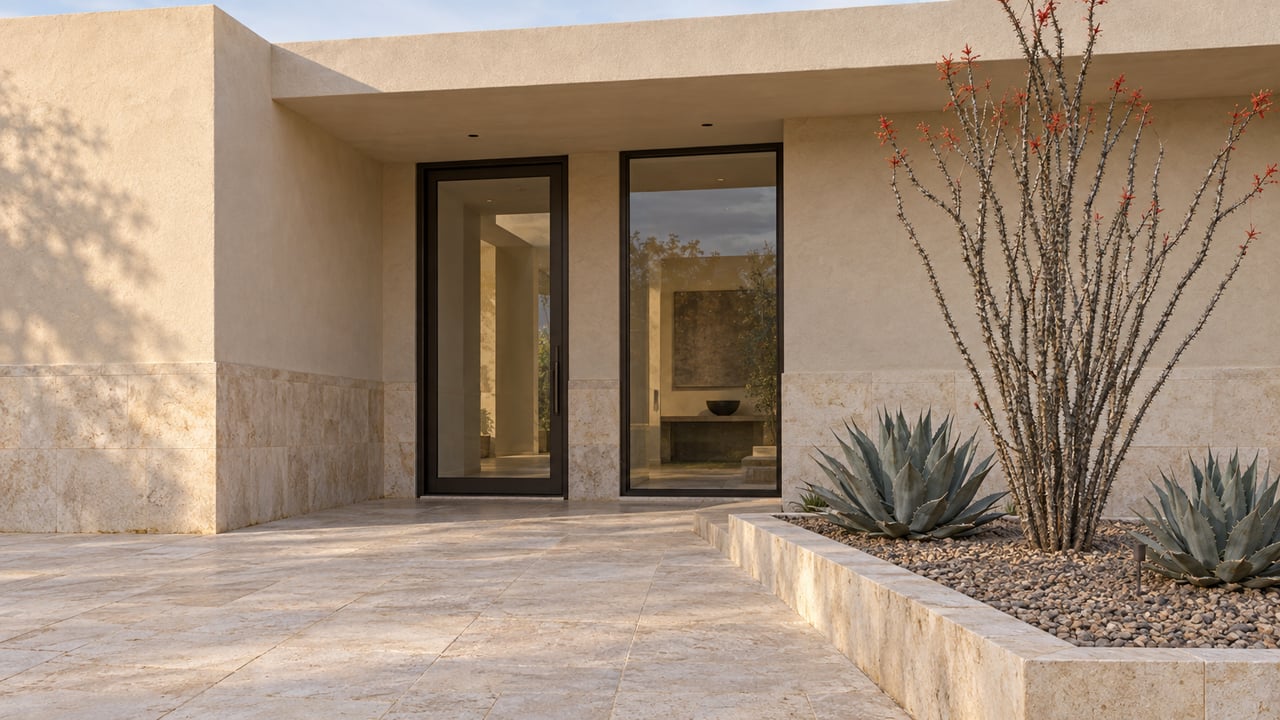
Troon North's Median Price Doesn't Tell You Which HOA You're Buying Into
October 1, 2026
October 1, 2026
A buyer touring Troon North this fall can pull up two listings priced within a few thousand dollars of each other and assume they're comparing similar homes. One might sit in Pinnacle Canyon, where combined master and sub-association dues run roughly $25 to $330 a month depending on lot tier. The other might sit in Talus, where dues span $17 to $389 a month for a different mix of attached and detached product. Same neighborhood name on the listing sheet. Same rough price. Different governing document, different fee structure, different rules about what you can build in the backyard.
That gap is the whole story. Troon North's median sale price across all 13 sub-communities came in around $1,395,000 for the rolling 12 months ending April 2026, up 9 percent year over year. It's a real number, and it's not wrong. But it's an average of an 1,800-acre master plan that contains everything from 1,800-square-foot lock-and-leave townhomes near the clubhouse to custom estates above $6 million on Pinnacle Course golf frontage. Treating that median as a single market, the way a buyer would treat a median in a subdivision with one HOA and one architectural standard, misreads what's actually for sale.
Troon North was platted starting in 1989 around two Tom Weiskopf-designed championship courses, the Monument and the Pinnacle. Development has continued in phases since, which is part of why the community now contains 13 distinct gated and semi-gated sub-communities layered under a two-tier HOA structure. The master Troon North Homeowners Association handles the things that apply across the whole plan: community trails, the two family parks, tennis and pickleball courts, and a master architectural review standard published on the association's own site. Underneath that master layer, each of the 13 sub-associations runs its own gates, private streets, common landscaping, and in some cases its own pool, with its own dues schedule on top of whatever the master association charges.
That's the mechanism the median hides. A property in Troon North isn't answering to one HOA. It's answering to two, and the second one varies enormously by which of the 13 sub-communities the home happens to sit in.
Here's how that plays out in dues, using the ranges reported across active sub-communities as of the same April 2026 reporting window:
| Sub-community | Combined monthly dues | What it typically means |
|---|---|---|
| Pinnacle Canyon | roughly $25 to $330 | Production and semi-custom homes, some backing the Monument Course, dues vary by lot tier |
| Talus | roughly $17 to $389 | Wide mix of attached and detached product under one gated sub-association |
| Reserve at Pinnacle Peak and Serene | flat around $250 | Newer construction with designer finishes |
| Privada and Candlewood Estates | higher, unpublished flat rate | Guard-staffed, custom-only subdivisions, dues absorb the cost of on-site security |
Privada sits on Four Seasons Resort grounds as an 11-homesite enclave with architect-led custom builds, which is a different cost structure entirely from a Talus townhome three phases removed from the golf corridor. Candlewood Estates carries its own gated, guard-staffed premium on top of whatever the Talus buyer down the street is paying. None of that shows up in a single median. It only shows up once you know which of the 13 names is on the recorded plat.
The $1,395,000 median doesn't just average across HOA structures. It averages across product tiers that don't really compete with each other. Entry townhomes and condos, the lock-and-leave inventory popular with snowbird owners, run roughly $850,000 to $1.1 million. Core single-family production and semi-custom homes, much of it in Pinnacle Canyon, sits in the $1.1 million to $2 million band. Above that, custom estates on larger lots push toward $3 million, and the top of the range, golf-frontage estates on the Pinnacle Course, closes above $6 million.
A buyer using the $1,395,000 median as a benchmark for a Talus townhome is comparing it against a number that includes multimillion-dollar Candlewood Estates closings. The median is real. It's just not describing the home in front of you unless that home happens to sit in the middle tier.
This is also why cross-subdivision comps produce bad pricing conversations. A 2,800-square-foot detached home in Reserve at Pinnacle Peak and a 2,800-square-foot detached home in Pinnacle Canyon can carry different dues, different architectural review standards, and different buyer pools, even at similar square footage. The more useful comp set stays inside the same sub-association, where the HOA structure, gate type, and lot tier actually match.
The headline stats for Troon North as a whole also make more sense once you stop reading them as one market. Cash purchases run around 42 percent of transactions across the community, higher than the broader North Scottsdale average, which lines up with how concentrated the snowbird and second-home buyer pool is in the entry and mid tiers. Average days on market sits at 96, a number that looks slow until you split it by pricing discipline rather than by geography: correctly priced homes are still moving inside 60 days, while overpriced listings sit for four to six months before a reduction. The sale-to-list ratio across the community is 95.8 percent, and homes above $3 million typically close 6 to 10 percent below original list after one or two price adjustments, which is a different negotiating posture than a $900,000 Talus unit competing against multiple snowbird buyers in the same price band.
None of that is unusual for a luxury resale market. It's just easier to explain once you know that a 96-day average is blending a fast-moving entry tier against a slower-moving trophy tier, rather than describing one uniform pace across 13 different sub-communities.
For context, the broader North Scottsdale luxury submarket, which spans the 85255, 85262, and 85266 ZIP codes and includes Desert Mountain, Silverleaf, DC Ranch, and Whisper Rock alongside Troon, carried a median around $1.325 million based on closed sales through July 2026. Troon North's own median sits close to that regional figure, which is consistent with its position as one of the stronger-appreciating major communities in North Scottsdale, but it doesn't change the fact that inside Troon North itself, the spread between tiers is wide enough that the community-wide number isn't a useful stand-in for any single sub-association.
If you're comparing homes across Troon North, the practical move is to ask which of the 13 sub-associations governs the specific property before you lean on any published median or price-per-square-foot figure. Ask for the combined dues, master plus sub-association, rather than just the number on the listing sheet, since that figure often reflects only one layer of the two. And if a renovation or new build is part of the plan, confirm early whether the design falls under the master association's architectural review standard, the sub-association's own rules, or both, since Troon North's structure means it can be either or both depending on where the lot sits.
Does a lower HOA number always mean lower total cost of ownership? Not necessarily. A sub-association with a lower published range, like Pinnacle Canyon's $25 to $330, can still sit inside a lot tier with higher property taxes or a different assessment history than a flat-rate community like Reserve at Pinnacle Peak. The dues figure is one input, not the whole cost picture.
Can I use a recent sale from a different sub-community as a comp? It works better as a rough directional reference than as a pricing anchor. HOA structure, gate type, and lot tier vary enough across the 13 sub-communities that a same-tier comp inside the same sub-association will usually tell you more than a similarly priced sale two subdivisions over.
Is the master HOA's architectural review the only approval I need? The master Troon North Homeowners Association maintains its own architectural standards across the whole plan, but each sub-association layers its own rules on top. A project can need sign-off at both levels depending on where the lot sits, which is worth confirming before finalizing renovation plans.
If you're weighing a specific sub-community inside Troon North and want to know what the current dues, architectural rules, and comps actually look like for that address, David Tucker can walk through the layers with you before you write an offer.
Stay up to date on the latest real estate trends.


THE RTT HOME GROUP
21020 N PIMA RD SCOTTSDALE AZ 85255